
Adding Spice Into The Mix:
Asian Influence In Dance
May is Asian Heritage Month and, as dancers who are Filipino-based, we want to reflect on our presence in the dance community: the extra flavour we bring on top of our choreography and teaching. Asian influence in dance may seem subtle until you look deeper into the stories that each region brings into the world of dance. Dance is deeply tied to community roots all over the world. Traditional dances, like China’s Lion Dance, Korea’s Talchum, Bali’s Legong, and Philippine Folk Dances, are deeply integral to cultural identity, festivals, and community life.
Through dance, personal anecdotes, tribal history, or religious rituals are a part of everyday life. There is a richness in the history of dance styles around the region, and Asian Heritage Month is a great time to honour such styles that originated from and were developed by our brothers and sisters in the East.
Key Summary
- Dance continues to be shaped by global cultures around the world
- The way we teach culture influences how they are understood and respected
- Representation and awareness strengthen studio environments
- Marketing can reflect culture with intention and respect
Across places like California, Hawai‘i, and the Philippines, Filipino dancers built spaces within Hip Hop communities to express themselves. They utilized dance as a way to connect, belong, and navigate identity in environments where they didn’t always feel fully seen. Instead of just following what already existed, Filipino dancers helped reshape what Hip Hop looked like in their own communities. They created teams, competitions, and spaces that felt like family while using the art form as a way to share their experiences growing up in a multicultural environment. They carried their own stories, using dance not just as expression, but as a way to understand where they stood in the world.
The History of Movement: Through The Lens of Asia
Let’s go a little bit back to the beginning. Art in Asia typically blends traditional elements into modern pieces, creating a fusion that honours historical and cultural roots while utilizing contemporary aesthetics to attract modern audiences. You can see these in stage performances, such as “Tan Chung Feng” by the contemporary Gong Gou Theatre group. Guofeng is a new modern street dance style that incorporates traditional Chinese elements, which can be observed through performances by artists like Gai Gai and Ma Xiaolong.
You can also see the influence of Asian culture in dance through the lens of martial arts, ancient combat systems that originated in the East, which those who grew up in the West utilized to accentuate their movements as they integrated these into their Hip Hop choreography. The sharpness of the cuts allowed choreographers to emphasize the athletic, explosive, and performative dance battles, which are seen in Breaking and Popping competitions. Just watch performances by The Lab and Vancouver’s very own, Brotherhood, on the World of Dance stage, and you’ll see a lot of flips and kicks reminiscent of combat.
Conversely, you can see Tai Chi techniques utilized by Shen Yun, a dance company based in New York that specializes in classical dances. With a more meditative nature, the company uses its fluidity to stress the elegance of Chinese classical dance. Often characterized by precise hand gestures, fluid arm movements, and elaborate costumes, these traditional techniques are woven into modern dance as a way to bring the culture onto the world stage. From Eastern Asian concepts of “Qi and Flow” influencing fluid movements and “Butoh”, with its focus on raw emotion and earth-bound movements, to the intricate hand gestures and rhythmic footwork that are reflective of South Asian culture, the richness of Asian influence in dance is masked by subtlety.
Recognition for their Innovation
Asian influence in dance is already present in modern spaces. Think about the groups that dominate pop culture today. Think about the worldwide stage and what’s popular on social media. What’s the first thing that comes to mind? K-Pop. Since the success of BTS on the world stage, Korean media have continued to actively produce groups of “idols” as a way to keep their industry alive. With a gruelling selection process and intense training regimen, K-Pop idols are drilled with hours of daily rehearsals in vocals and dance. From basic moves to intricate choreography, entertainment companies bank heavily on these trainees’ dance skills to showcase on the world stage.
Now go to TikTok, Instagram, or any social media platform that hosts videos, and you’ll see thousands of trends derived from K-Pop choreography. This is how the world works now. This is how culture spreads rapidly from country to country. To teach the significance of Asian influence in dance is to be reflective of how much of the movement was brought over to modern forms.
What we teach today has been carried over eras of culture and tradition, not just created overnight. These movements were passed down over generations of history and global movement.
This doesn’t mean turning every class into a history lesson. It just means creating awareness. Creating spaces of understanding and respect for the groups and cultures from which they derive their art, and helping dancers understand that each movement has deep meaning.
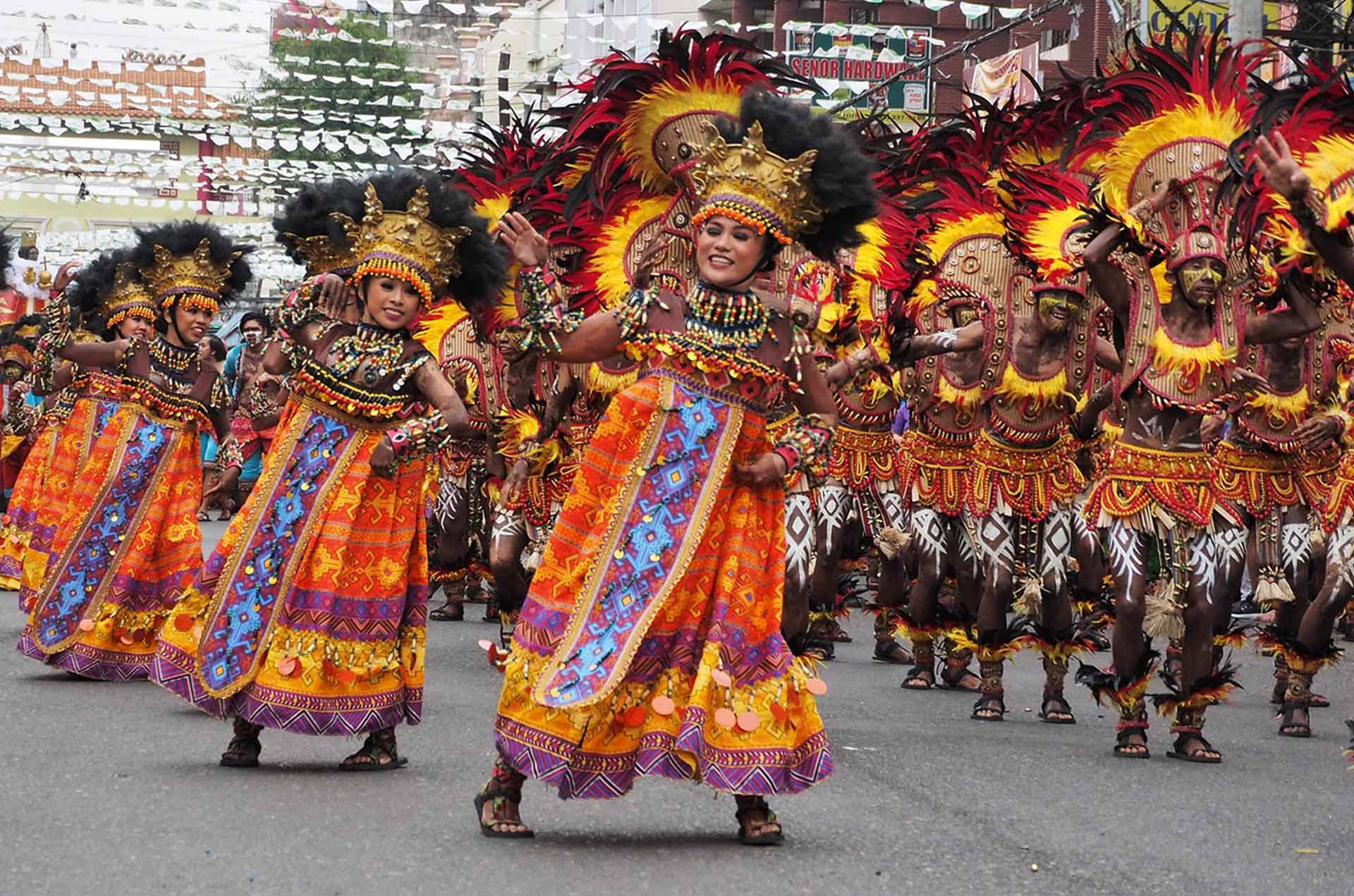
A vibrant Filipino festival street dance blending Indigenous-inspired costumes, rhythmic movement, and celebratory cultural storytelling.
Marketing that Reflects Culture
Through social media, we are given a platform to share culture with respect. The consistency we lead with allows our audiences to continuously learn about dance’s deep history and how we got to where we are today. By shining a light on ideas, cultures, and contexts that are important, we are simultaneously giving credit where it is due and keeping the dance community an inclusive space where everybody can belong.
Dance studio marketing isn’t just about showcasing what you do on the daily. It also showcases stories like these, where different groups from various contexts can feel like they have a voice on the world stage.
If culture lives in your studio, it should live in your marketing too. We, at Marketing Movez, want to shift your values into the spotlight in ways that you may not have the resources to do. Whether we’re talking about Black History Month, Asian Awareness Month, or Pride Month, we want to share stories that matter to you.
From social media to videography, or even just writing if you have ideas that would boost your online visibility, we’d love to partner with you. Dance will always be our first love, and we’re evolving how we show that love by building up studios like yours so you can share your stories with the communities around you and give voices to the ones who don’t have the platform to do so.
Message us or email info@marketingmovez.com to book a free discovery meeting.
Let’s tell your story the right way.
Connect with Marketing Movez today!
